What Happens During a Dog Grooming Appointment? Guide
November 19, 2026 · 30 min read · Lire en français
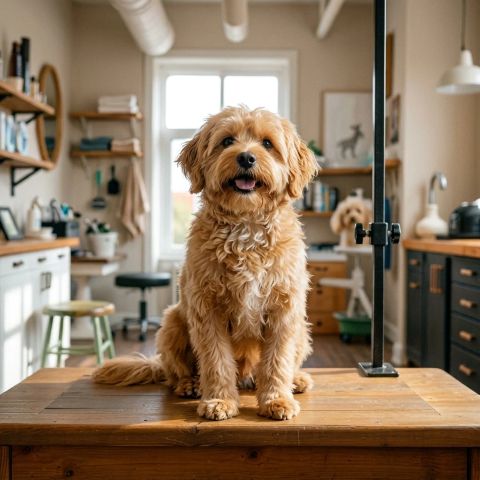
During a professional dog grooming appointment, your pet undergoes a comprehensive, seven-stage health and hygiene routine that includes an initial nose-to-tail health assessment, pre-bath brushing and sanitary trimming, a warm hydro-massage bath with coat-specific shampoo, high-velocity blowout drying, nail clipping and ear cleaning, and precision breed-standard or lifestyle haircutting. Far beyond a cosmetic makeover, a full grooming session is an essential wellness checkup performed by a trained professional who systematically inspects your dog's skin, ears, coat, and joints while keeping them calm and secure.
For many pet owners across Quebec, dropping their canine companion off at a salon can feel intimidating if they do not know what happens behind closed doors. Whether you are scheduling your puppy's first visit or looking for premier dog grooming Montreal services, demystifying the professional grooming journey gives you peace of mind and empowers you to become a better advocate for your dog's physical health and emotional comfort.
The Arrival and Check-In Consultation: What Groomers Ask and Observe
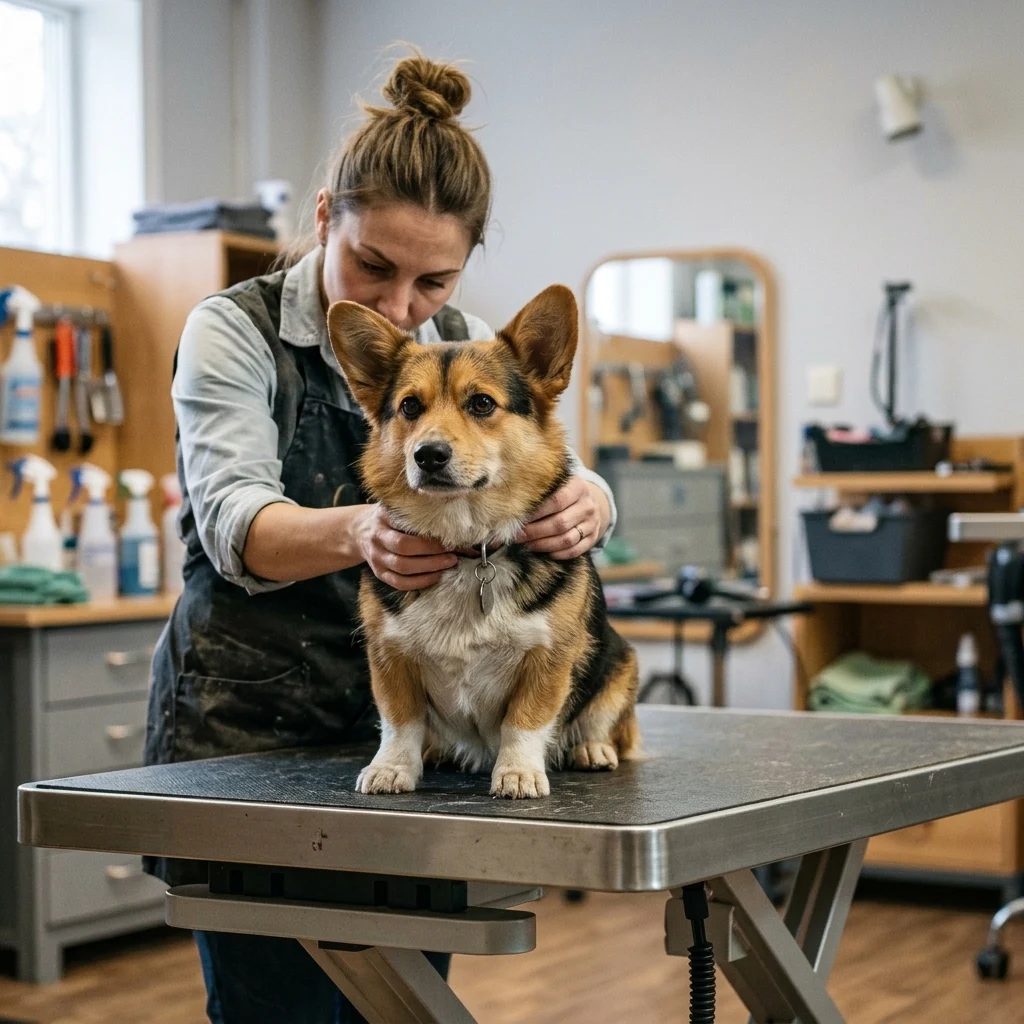
A professional grooming appointment never begins at the bathtub or styling table. It begins the moment you step through our salon doors with your dog on a leash. The check-in consultation is a critical two-way dialogue between you and your groomer. During these initial five to ten minutes, we observe your dog's gait, posture, eye contact, and overall emotional state while reviewing their medical history and your aesthetic goals.
We ask targeted questions about changes since your last visit. Has your dog developed new skin sensitivities, hot spots, or food allergies? Have they shown signs of stiffness in their hips or rear legs after long walks in cold weather? Have they had an ear infection recently? For rescue dogs or newly adopted companions, we also discuss known triggers, such as sensitivity around their paws, fear of loud mechanical noises, or defensive reactions around other unfamiliar dogs.
Visual and Hands-On Coat Assessment
Before confirming the grooming plan, we perform an immediate hands-on assessment of the dog's coat and skin. A groomer's hands are their most sensitive diagnostic tool. We run our fingers through the dense undercoat down to the skin surface, checking for hidden matting behind the ears, in the armpits (friction zones), across the belly, and around the tail base. Matting that looks mild on the surface can frequently form solid felted pelts underneath, which drastically changes the handling protocol.
During this tactile check, we also inspect the epidermis for redness, dry flaking, flea dirt, ticks, or unusual lumps and bumps. If we discover tight matting that cannot be brushed out without causing pain, or if we identify an open skin lesion, we discuss the safest path forward with you right at the front desk rather than making assumptions in your absence.
Agreeing on Styling, Length, and Lifestyle Fit
Clear communication regarding haircut styling prevents misunderstandings at pick-up time. Many pet owners arrive with photos saved on their phones showing show-ring poodle trims or voluminous doodle "teddy bear" styles. Our job as master groomers is to translate those inspiration photos into practical reality based on your dog's actual coat density, curl pattern, daily activity level, and how often you brush them at home.
We confirm specific details: how short you want the body, whether you prefer rounded or clean-shaven feet, the desired length of the ears and tail plume, and how short to trim around the muzzle and eyes. If your dog enjoys hiking muddy trails on Mont-Royal, a slightly shorter, practical lifestyle trim might keep them cleaner and significantly more comfortable than an intricate long coat.
Step-by-Step Breakdown of the Full Grooming Sequence
Every reputable grooming salon follows a disciplined, step-by-step workflow designed around animal welfare, ergonomic safety, and structural efficiency. Skipping steps or doing them out of sequence inevitably leads to discomfort, poor cut quality, or elevated stress for the animal.
| Grooming Phase | Estimated Duration | Key Procedures Performed | Comfort & Safety Priority |
|---|---|---|---|
| 1. Check-In & Assessment | 5 – 10 mins | Health intake, coat check, styling consultation | Stress evaluation, building initial handler rapport |
| 2. Pre-Bath Prep & Hygiene | 15 – 30 mins | Nail trimming, ear cleaning, pre-brushing, sanitary trim | Gentle paw handling, preventing water-tightened mats |
| 3. Hydro-Therapy Bath | 20 – 35 mins | Double shampoo wash, deep conditioning, full rinse | Lukewarm water control, non-slip tub mats, eye safety |
| 4. High-Velocity Drying | 25 – 50 mins | Towel press, high-velocity blowout, fluff drying | Ear muff protection (Happy Hoodie), no extreme heat |
| 5. Haircut & Scissoring | 30 – 60 mins | Clipper body lines, scissor face/feet, edge blending | Steady safety loop restraint, frequent posture breaks |
| 6. Final Finishing & Debrief | 10 – 15 mins | Nail buffing, coat mist, bandana, owner health report | Rewarding positive behavior, transparent communication |
Pre-Bath Brushing and Sanitary Clearing
Why do groomers brush before bathing? There is an immutable golden rule in professional pet styling: never wet a knotted coat. Water acts as a binding agent on tangled fur. When loose curls or dense undercoat become wet and subsequently dry, the hairs shrink and twist tighter against one another, turning manageable tangles into severe, skin-tight mats. Removing dead shed and working through minor tangles with a slicker brush and metal greyhound comb before water touches the fur saves your dog immense discomfort.
At this stage, we also clip the sanitary areas using a specialized surgical-length blade (typically a #10 blade). This involves clearing excess hair around the groin, anus, and under the lower belly. Keeping these sensitive zones short prevents urine scalding, fecal accumulation, and skin dermatitis.
Nail Trimming and Dremel Grinding
Nail trimming is frequently the most stressful part of grooming for dogs when attempted at home. In a salon setting, groomers lift each paw backward naturally along its anatomical joint angle rather than pulling it outward, which prevents unnecessary strain on elbows and shoulders. Using heavy-duty, razor-sharp guillotine or scissor-style clippers, we trim back the dead nail horn millimeter by millimeter.
Our primary concern is protecting the quick—the living blood vessel and nerve bundle running inside the nail core. In dogs with clear white nails, the pink quick is visible, but in dogs with black nails, we read the cross-section of the cut surface. As soon as a moist, dark oval dot appears in the center of the nail, we stop cutting. We follow with a rotary diamond-grit Dremel grinder to round off sharp edges, smooth rough facets, and safely push the nail back as short as possible without bleeding.
Ear Cleaning and Canal Inspection
Canine ear canals form an "L" shape that easily traps moisture, dead wax, yeast, and ambient bacteria. Using a veterinarian-approved, alcohol-free ear cleansing solution, we apply a few drops into the canal, massage the ear cartilage base to break up debris (you will hear a satisfying squishing sound), and wipe out dissolved wax using soft cotton pads. We never insert cotton swabs or Q-tips deep into the ear canal, as this risks puncturing the eardrum or packing debris further inside.
If your dog belongs to a non-shedding breed like a Poodle, Bichon Frise, or Schnauzer that grows dense hair inside the ear canal, we gently pluck excess hair only when medically advisable and agreed upon with your vet. According to the ASPCA Dog Grooming Guidelines, keeping ear canals clean and free of heavy wax plugs is one of the most effective non-invasive defenses against painful otitis externa.
The Hydro-Massage Bath and Conditioning Ritual
Once preliminary hygiene tasks are complete, your dog is accompanied to our commercial bathing tubs. Many dogs that panic during home baths in slippery human porcelain bathtubs remain calm in a salon because our facilities feature textured rubber safety grates, non-slip entry ramps, and adjustable safety tethers that keep them balanced and supported.
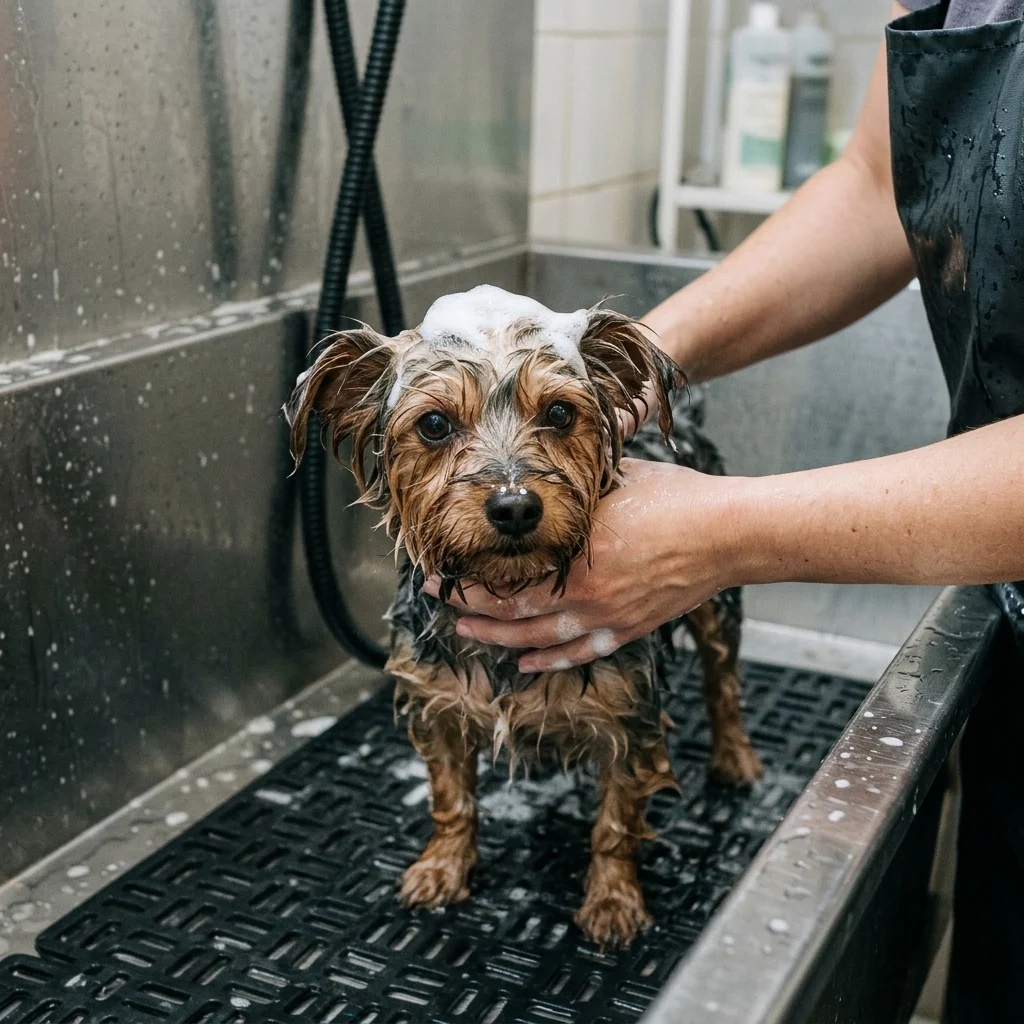
The bathing process is not a hasty scrub-and-rinse. It is a calculated therapeutic treatment. We calibrate water temperature to a gentle lukewarm warmth (around 36°C to 38°C), ensuring it never shocks the dog's skin or causes overheating. We use specialized hydro-surge bathing wands that mix water and shampoo under steady, aerated pressure. This breaks up deep-seated grease, road salt, and dirt right down to the root follicles while providing a soothing muscular massage along your dog's spine and shoulders.
Selecting Coat-Specific Shampoos and Conditioners
Human shampoos have an acidic pH (around 5.5), whereas canine skin has an alkaline pH of 6.2 to 7.4. Washing a dog with human soap strips their protective lipid mantle, leaving their epidermis vulnerable to fungal and bacterial infections. In a professional salon, we tailor shampoo selections to your dog's immediate dermal needs:
- Colloidal Oatmeal Shampoos: Formulated with soothing beta-glucan to hydrate dry skin, soothe seasonal allergies, and calm dermatitis.
- Degreasing Citrus Formulations: Designed for oily coats (such as Cocker Spaniels) or dogs with stubborn greasy grime.
- Deep Undercoat Deshedding Solutions: Infused with omega fatty acids and silk proteins that loosen stuck, dead undercoat fibers before the blowout phase.
- Hypoallergenic Tearless Cleansers: Gentle, fragrance-free solutions crafted specifically for sensitive faces, muzzles, and eye corners.
Every full bath includes a conditioning treatment. Conditioner closes the hair cuticle scale, locks in moisture, eliminates static electricity, and adds elasticity so individual hairs can resist tangling during daily activity.
The Critical Importance of Complete Rinsing
Rinsing takes longer than the wash itself. Professional groomers spend extensive time flushing clean water through the armpits, groins, paw webs, and underbelly. Even a microscopic trace of residual shampoo left to dry against the skin will cause acute chemical irritation, leading to furious scratching, hot spots, and secondary bacterial infections. We rinse until the water runs crystal clear and the coat exhibits a clean, squeaky resistance under our fingertips.
Professional Drying: Force Blowouts vs. Gentle Fluff Drying
Drying is perhaps the most misunderstood phase of professional grooming, yet it is where the majority of deshedding and coat preparation actually occurs. We begin with a gentle towel press—squeezing moisture out of the coat without vigorous circular rubbing that creates friction knots.
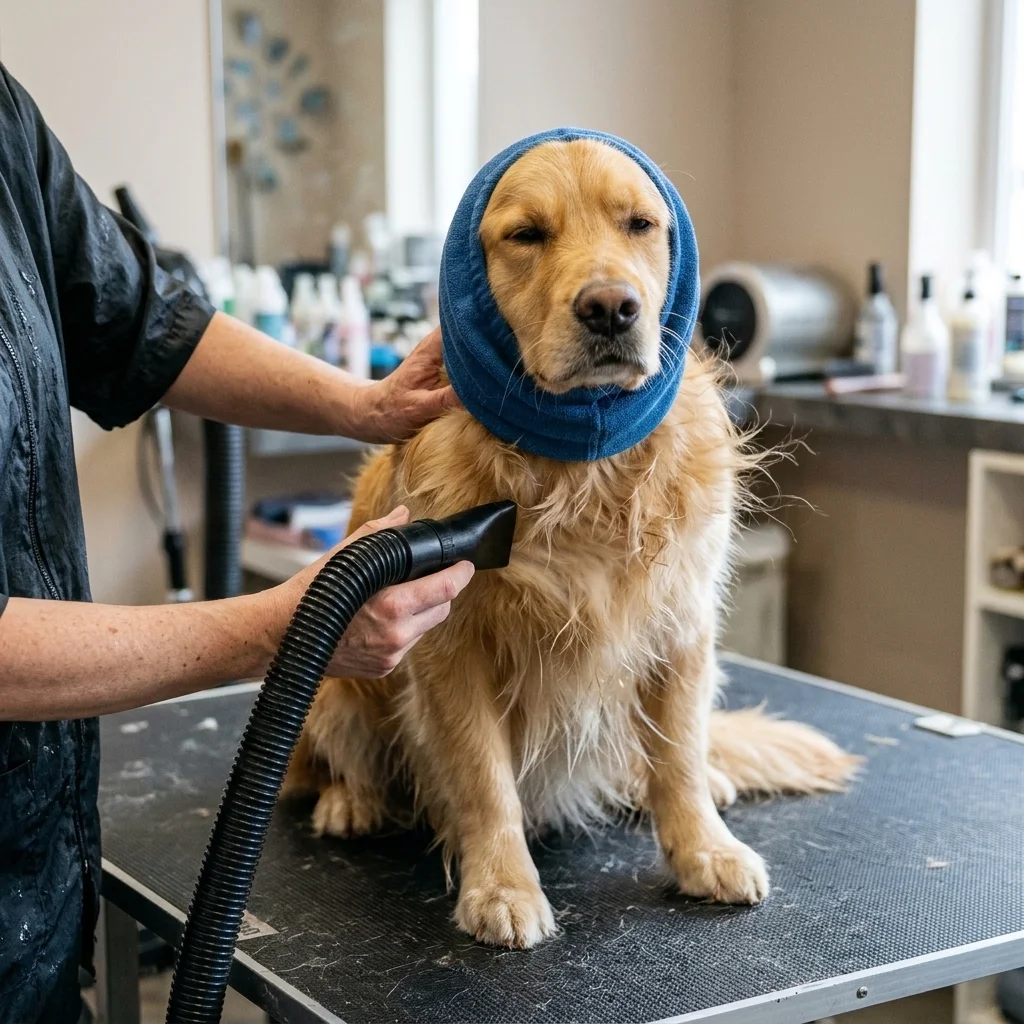
Next comes the high-velocity (HV) force dryer. Unlike household hairdryers that rely on hot heating coils to evaporate water (which dries out canine skin and risks burns), professional HV dryers rely on concentrated room-temperature airflow blowing at high speeds. The intense blast of air physically sheets water off the dog's body while effortlessly loosening trapped undercoat, dust, and dander that no comb could ever reach.
Deshedding Double-Coated Breeds
For double-coated breeds like Golden Retrievers, German Shepherds, Huskies, and Bernese Mountain Dogs, the high-velocity blowout is miraculous. The directional nozzle separates the dense outer guard hairs and blows out thick clouds of impacted undercoat without damaging the hair follicles. Pet parents often comment that their home vacuum cleaner breathes a sigh of relief for weeks following an appointment at our salon!
Fluff Drying for Curly and Scissor-Ready Coats
For breeds with continuously growing hair (Poodles, Doodles, Shih Tzus, Bichons), the drying technique shifts to "fluff drying." Here, the groomer works section by section with a variable-speed dryer in one hand and a curved slicker brush in the other. By brushing the hair straight outward from the root as the warm airflow hits it, the groomer straightens curly hair into a fluffy, uniform structure. A coat must be thoroughly fluff-dried and free of moisture before scissoring; clipping an uneven, damp coat produces ragged, choppy lines.
Low-Stress Protocols: The "Happy Hoodie" and Noise Mitigation
Because high-velocity dryers produce a roaring motor hum and rushing air, they can cause acoustic stress for sound-sensitive canines. To ensure our guests feel safe, we slip an elasticized terrycloth sleeve called a "Happy Hoodie" over the dog's ears and head. This simple, humane accessory muffles loud decibels and stabilizes ear flaps from flapping in the wind, transforming what could be an overwhelming sensory experience into a relaxed, secure process.
The Haircut and Scissor Finish: Artistry Meets Canine Anatomy
Once the coat is clean, conditioned, blown out, and combed through to verify that a metal comb glides smoothly from nose to tail without snagging, the styling phase begins. Professional haircutting requires an intimate understanding of canine skeletal anatomy, balance, and coat geometry.
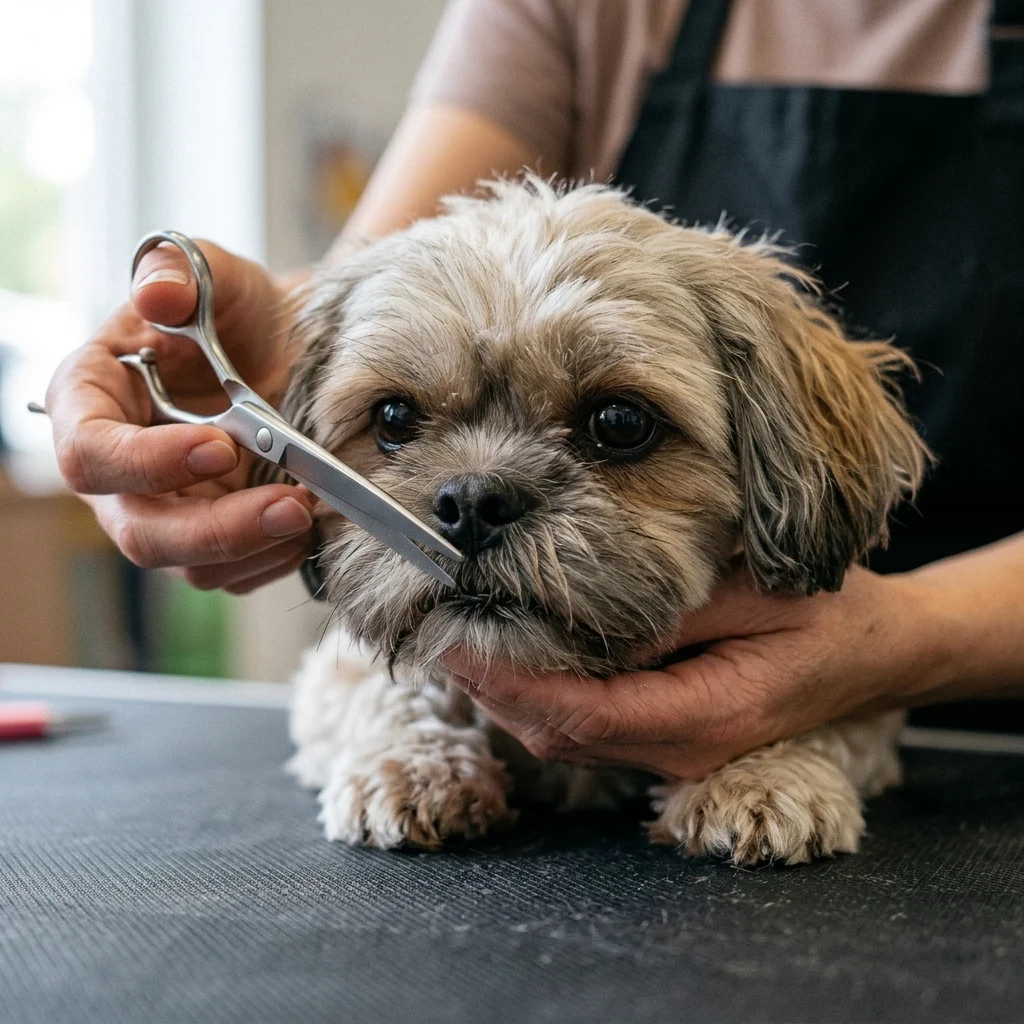
We use commercial-grade professional clippers equipped with snap-on stainless steel guard combs to establish uniform coat length across the back, flanks, neck, and ribcage. Clippers are guided gently along the natural lay of the hair growth. We never push clippers aggressively against the grain or dig into delicate skin folds. Skilled groomers use clippers for bulk length reduction, but the hallmark of master-level styling lies in hand scissoring.
Hand-Scissoring the Head, Muzzle, and Feet
Hand scissoring requires intense focus, steady hands, and rhythmic scissor discipline. Using straight shears, curved finishing shears, and Japanese-steel chunkers (blending shears), we sculpt three-dimensional forms:
- The Head & Muzzle: We trim the bridge of the nose to open up the eye corners, ensuring your dog has clear vision. We shape round "teddy bear" muzzles, bevel chin lines, and taper ear fringes to frame the face symmetrically.
- The Beveled Paws: Using small curved safety shears, we bevel the hair around the paw perimeter, creating clean "cat feet" or rounded teddy paws that prevent snowballs, mud, and street debris from clumping onto feet.
- The Rear Angulation: We trim along the hocks and stifle joints, following the athletic lines of the dog's legs to create a balanced silhouette.
According to standards upheld by the American Kennel Club (AKC), correct scissoring enhances a breed's natural athletic contours while preserving protective coat functionality.
How Professional Groomers Keep Anxious, Senior, and High-Energy Dogs Safe
In our daily work across thousands of salon visits, we recognize that every dog brings a unique emotional temperament to the table. Some dogs bounce in eagerly with wagging tails, while others experience situational anxiety, separation distress, or touch-sensitivity. Maintaining safety and emotional well-being is the foundation of professional ethics.
Grooming tables are equipped with hydraulic or electric lift systems that glide smoothly down to ground level. This allows heavy or senior dogs with painful arthritis to walk directly onto the platform without risking joint injury from jumping. Table surfaces are layered with high-grip textured rubber mats so dogs never feel unsteady on their paws. We secure dogs using padded neck loops and belly support slings that prevent sudden leaps off the table while offering resting support for dogs whose hind legs tire easily.
Reading Subtle Canine Stress Signals
Experienced master groomers constantly read micro-cues of canine body language. We watch for subtle signs of discomfort long before a dog growls or snaps:
- Excessive lip licking and repetitive yawning when not tired
- "Whale eye" (showing the white sclera of the eye while holding the head stiff)
- Stiffening of the jawline or sudden freezing
- Pawing at the handler or attempting to tuck the tail firmly against the belly
- Trembling or panting with a retracted tongue
When these signals appear, we stop working immediately. We never correct or discipline a fearful dog. Instead, we remove tools, allow the dog to sit or lay down, offer a sip of fresh water, and apply gentle pressure points along the chest. In our salon, we believe that an unfinished haircut can always be finished tomorrow, but a dog's emotional trust in the grooming process takes months to rebuild once broken. If your dog exhibits persistent nervousness during care, exploring our gentle approach for anxious dogs reveals how low-stress handling techniques transform fearful appointments into calm, cooperative experiences.
How Long Does a Grooming Appointment Take? (Key Factors Explained)
One of the most frequent questions pet parents ask when handing over the leash is: "When should I come back?" A full grooming appointment generally requires between two and four hours, depending on size, coat density, and service scope.
| Dog Size & Coat Category | Typical Duration | Representative Breeds | Primary Time-Consuming Steps |
|---|---|---|---|
| Small / Smooth Coat | 1.5 – 2 Hours | Chihuahua, Pug, French Bulldog | Nail trimming, facial fold cleaning, deep bath rinse |
| Small & Medium Scissor Coat | 2 – 2.5 Hours | Shih Tzu, Mini Poodle, Cavalier, Yorkie | Fluff drying, sanitary work, hand-scissor face sculpting |
| Large Double-Coated Breeds | 2.5 – 3.5 Hours | Golden Retriever, Husky, German Shepherd | Extensive pre-brushing, high-velocity blowout deshedding |
| Large Doodles & Standard Poodles | 3 – 4 Hours | Goldendoodle, Labradoodle, Standard Poodle | Thorough dematting check, root-to-tip fluff drying, scissor styling |
| Giant Breeds | 3.5 – 4.5+ Hours | Bernese Mountain Dog, Newfoundland, Great Pyrenees | Heavy coat line combing, dual-groomer handling, post-wash blowouts |
The Impact of Coat Condition and Regular Maintenance
The single greatest variable influencing appointment length is coat maintenance between visits. A Doodle brushed thoroughly at home every two days can breeze through styling in two hours. That exact same dog, if brought in with neglected friction mats behind the ears and along the flanks, requires careful line combing, targeted detangling, and restorative conditioning that can easily add sixty to ninety minutes of meticulous handling.
Understanding salon workflow also demystifies the duration. High-end salons avoid stressful rushing. Dogs are allowed short resting breaks between bathing, drying, and cutting to drink water, stretch their limbs, and decompress. For detailed insights on salon rate structures, review our transparent breakdown of professional dog grooming cost in Montreal.
The Pick-Up Debrief: What Your Groomer Discovered
When you receive the text or phone call notifying you that your pet is ready, the appointment enters its final, essential stage: the pick-up debrief. Because professional groomers systematically touch every square centimeter of a dog's anatomy from nose to tail tip under bright daylight lighting, we serve as your pet's frontline healthcare allies.
During the debrief, we review everything we observed during the session:
- Dermal & Subcutaneous Findings: We document new sebaceous cysts, warts, lipomas (fatty lumps), or suspicious moles, noting their size and location so you can have your veterinarian evaluate them during your next clinical exam.
- Parasite Discovery: If we detected flea dirt or an embedded tick, we notify you immediately and explain the removal steps taken.
- Ear Canal Health: We report if the ear canals produced brown yeast discharge, exhibited redness, or gave off an unusual odor indicating early otitis.
- Dental & Gum Visuals: While professional teeth scaling is a veterinary procedure, we observe heavy tartar buildup, fractured premolars, or inflamed gingivitis during muzzle styling.
- Behavioral Evolution: We share how your dog handled each step, noting whether they were more confident on the table than last time or if they showed sensitivity when their rear paws were handled.
We also offer customized home maintenance coaching. We show you the exact comb angle and slicker brush tension required to keep the ears and tail mat-free until your next scheduled visit. If you are uncertain about the ideal interval between salon visits, explore our expert guide on how often your dog should see a groomer to establish a healthy rhythm for your breed.
Frequently Asked Questions About Dog Grooming Appointments
Can I stay and watch my dog during the grooming appointment?
In almost all circumstances, groomers recommend that pet parents do not remain in the styling area during the appointment. Dogs are intensely bonded to their owners. When a dog sees or hears their parent standing nearby, their natural instinct is to try to reach them—whining, pulling, and leaping across the grooming table. A moving, excited dog on a high table while sharp clippers and shears are in motion creates a severe safety hazard. Once owners step out of sight, dogs relax, look to the groomer for direction, and settle into a calm, cooperative rhythm.
How often should my dog have a full grooming session?
Optimal grooming frequency depends on coat type, growth rate, and lifestyle. Dogs with continuously growing scissor coats (Poodles, Doodles, Shih Tzus, Bichons) require full grooming every four to six weeks to prevent painful matting and keep hair out of their eyes. Double-coated breeds (Golden Retrievers, German Shepherds, Collies) benefit from bath, blowout, and deshedding appointments every six to eight weeks. Short-haired breeds (French Bulldogs, Boxers) thrive on a bath, ear cleaning, and nail trim routine every eight to twelve weeks.
What happens if my dog gets nervous or aggressive on the grooming table?
Professional groomers are trained in humane restraint, desensitization, and positive reinforcement. If a dog becomes overwhelmed, we immediately pause the procedure, speak in soothing tones, and allow them to take a break. We never use force or anger. For dogs that panic during nail clipping or face scissoring, we use gentle swaddling, distraction treats, or lightweight breathable mesh safety muzzles if necessary to keep everyone safe. If a dog reaches a threshold of acute panic where continuing would cause psychological trauma, we stop the appointment and recommend breaking the service into shorter, multi-stage sessions.
How should I prepare my dog on the morning of their appointment?
To set your dog up for a wonderful salon experience, take them on a brisk twenty-minute walk before arrival to burn off excess physical energy and allow them to empty their bladder and bowels. Avoid feeding a large, heavy meal right before drop-off, as nervous stomachs combined with warm baths can cause nausea. Ensure their collar and leash are secure, bring along any veterinary notes regarding health restrictions, and bring a favorite photo of the haircut style you have in mind.
What is the difference between a "bath and tidy" and a full haircut?
A "bath and tidy" (often called a maintenance groom) includes the full hydro-massage bath, blow dry, nail trim, ear cleaning, and light trimming strictly restricted to the sanitary areas, paw pads, feet perimeters, and visor over the eyes; the body coat length is left untouched. A "full haircut" includes all those hygiene services plus a full-body clipper and scissor styling that reduces coat length across the entire torso, legs, tail, and head according to breed patterns or owner preference.
Why is my dog so tired or thirsty after returning from the groomer?
It is completely normal for dogs to sleep deeply or drink extra water for a few hours after a salon visit. A grooming session involves significant sensory stimulation—new scents, unfamiliar canine sounds, standing balanced on a table, experiencing high-velocity airflow, and intense focus. Just like human athletes resting after a productive workout, your dog is decompressing from high mental engagement. Offer fresh water, a comforting meal, and a cozy spot for an uninterrupted afternoon nap.
Conclusion: Partnering with Your Groomer for Lifelong Health
Understanding what happens during a dog grooming appointment reveals that professional grooming is far more than an occasional luxury—it is a vital pillar of preventive healthcare, hygiene, and canine well-being. From early detection of hidden health conditions to the sensory relief of a clean, knot-free coat and neatly trimmed paws, consistent grooming keeps your best friend thriving in both body and spirit.
At Toutou Village in Montreal, our experienced master groomers treat every dog with the patience, dignity, and gentle hands we would demand for our own four-legged family members. Whether your companion needs a restorative winter bath, an expert deshedding blowout, or a precision scissor haircut, we welcome you to experience the difference that dedicated, compassionate care makes.
Ready to treat your pup to an exceptional grooming experience? Book an appointment today through our convenient online booking platform or give our friendly team a call at (514) 357-4509. You can also text us at (263) 384-4509 or visit our boutique at 6274 Avenue Somerled in Montreal. For premium brushes, specialized pet shampoos, and wellness essentials to maintain your dog's coat between salon visits, explore our curated collection in our online pet shop. We look forward to meeting you and your furry companion!