
Last updated: October 26, 2026
When it comes to essential dog coat care Montreal winter conditions require a proactive balance of moisture retention, friction management, and prompt road salt removal. When sub-zero outdoor blasts collide with dry indoor electric heating, your dog’s natural protective lipid barrier depletes rapidly, causing severe dandruff, brittle fur, and painful mats. By implementing a targeted routine of daily line brushing, lukewarm rinsing after snowy walks, and maintaining humidity levels at home, you can protect your companion from skin irritation and seasonal coat damage throughout the Quebec winter.
Whether you share your home with a thick double-coated Siberian Husky, a wire-haired terrier, or a delicate doodle mix, winter weather in Quebec introduces unique environmental stressors that require specialized care. Navigating heavy snowfall, chemical de-icing salts, and biting wind chill is an essential part of regular dog grooming Montreal pet owners must prioritize each year. Understanding how cold air affects canine skin biology allows you to adapt your home routine and partner effectively with your groomer before small tangles turn into solid pelts.
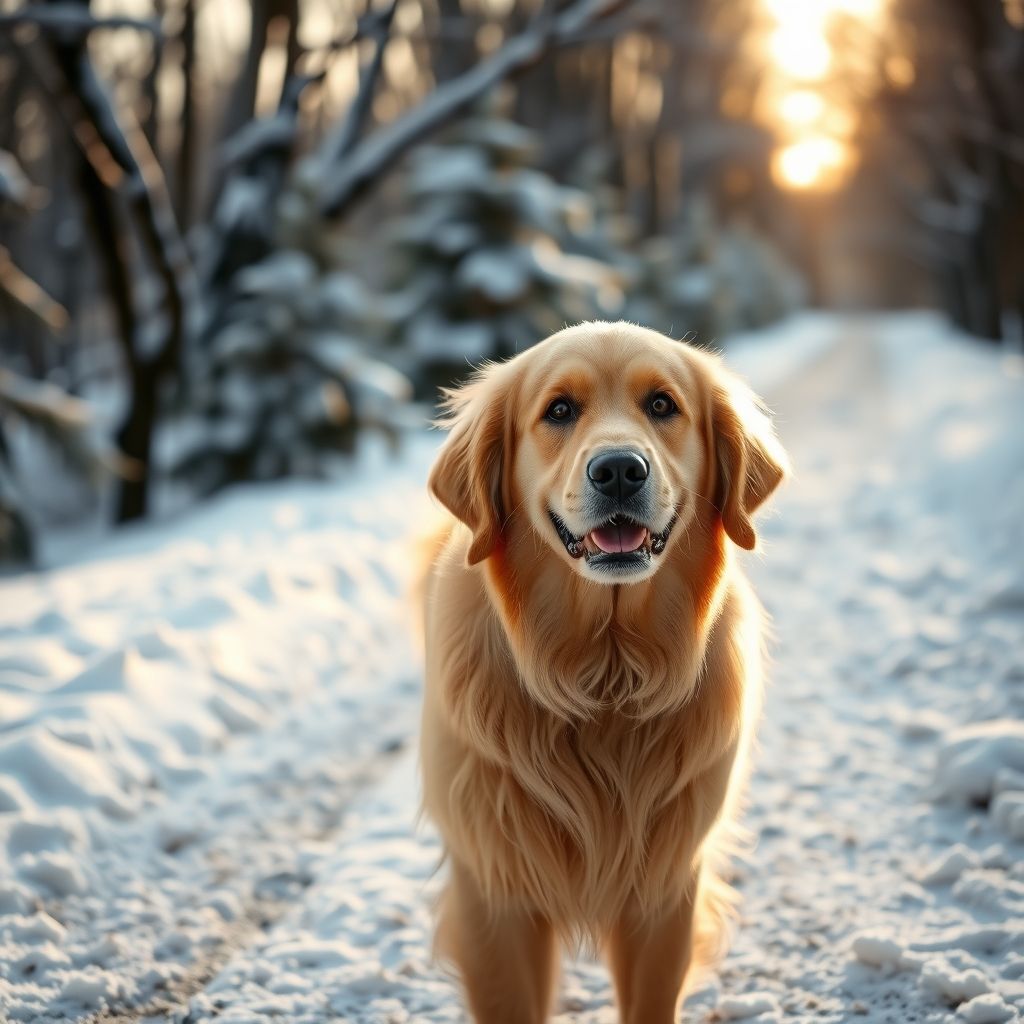
The Montreal Winter Climate vs. Your Dog’s Coat Biology
Many pet parents assume that because dogs are covered in fur, winter cold affects them much like a human wearing an insulated parka. In reality, canine skin is surprisingly delicate and substantially thinner than human skin. While human skin consists of 10 to 15 cellular layers within the epidermis, canine epidermis comprises only 3 to 5 layers. This structural difference makes the outer dermal barrier exceptionally vulnerable to extreme temperature fluctuations and environmental drying.
When January temperatures plunge to -15°C or -25°C across Montreal, outdoor relative humidity drops dramatically. Cold air holds very little ambient moisture, which strips water molecules directly from the outermost layer of your dog’s hair shafts. The moment your dog steps back inside your home, electric baseboard heaters and central forced-air heating systems immediately worsen this moisture deficit. Indoor humidity levels often hover below 25%, causing rapid evaporation of the cutaneous moisture reservoir and leaving the coat brittle, rough, and prone to static cling.
A dog’s skin relies on sebum, a complex oily mixture produced by the sebaceous glands connected to each hair follicle. Sebum acts as a natural water-repellent seal that coats each hair strand, preserves flexibility, and protects against environmental bacteria and fungi. In sub-zero weather, this lipid layer solidifies and breaks down faster than the body can replenish it. The result is dry, flaky dander (cutaneous desquamation), persistent scratching, and hair that snaps under minor physical tension.
As daylight hours shorten heading into November, canine biology responds by increasing natural melatonin synthesis, triggering the growth of a dense seasonal undercoat. This seasonal undercoat is designed to trap a layer of warm air directly against the skin, functioning like natural thermal loft. However, if dead undercoat is allowed to accumulate without regular removal, it forms an impermeable felted barrier. Instead of insulating your dog, compacted undercoat traps moisture from melting snow, creates micro-climates for bacterial growth, and prevents the skin from breathing.
Master Groomer Note (Hamid, Toutou Village): “In our Montreal salon on Somerled Avenue, we consistently see dog owners make the mistake of shaving double-coated breeds right before winter to avoid snowy mess, or conversely, letting coats grow completely untamed until spring. Shaving ruins the natural insulation system because guard hairs protect against freezing wind and wet slush. On the flip side, leaving dead winter undercoat unbrushed creates severe pelted matting near the skin that traps dampness for days. The secret to winter comfort is not length—it is thorough, aerated separation of every hair strand down to the dermal layer.”
Winter Hazards: Road Salt, Chemical De-icers, and Slush Kickback
Walking through Montreal streets like Sherbrooke, Saint-Laurent, or neighborhood sidewalks in NDG and the Plateau exposes your dog to heavy chemical treatments. Municipalities and private property owners rely heavily on de-icing agents to clear slippery concrete and asphalt. Understanding the distinction between natural rock salt and synthetic chemical compounds is vital for preserving your dog’s coat and skin integrity.
Traditional rock salt consists of coarse sodium chloride, which acts as a desiccant, drawing vital moisture straight out of skin cells and hair shafts. When crystals of sodium chloride lodge into leg feathering and the underbelly, they grind against hair cuticles with every stride, stripping protective sebum and causing hair shafts to fray and split. Left unwashed, the salt dries into a chalky white film that severely irritates the skin, triggering relentless licking and localized dermatitis.
Even more hazardous are chemical de-icers containing calcium chloride, magnesium chloride, and potassium chloride. As detailed in the winter clinical veterinary guidance published by Montreal.vet, calcium chloride produces an exothermic reaction upon contact with moisture. When your dog walks through wet slush containing calcium chloride, the chemical compound literally releases heat directly against the skin, causing severe chemical burns, redness, and deep abrasions across paw pads and tender underbelly tissue.
Another major winter hazard is mechanical slush kickback. As your dog trots through gray street slush, their paws naturally flick a continuous stream of wet road slurry, grit, and dissolved chemicals onto their chest, armpits, and abdomen. In low-slung breeds such as Corgis, Dachshunds, and Bassets, this contact is continuous and direct. When the contaminated slush dries indoors, the dissolved salts crystallize around individual hair strands, turning them into rigid, abrasive needles that bind surrounding fur into rock-hard clumps.
Protecting your companion requires an immediate post-walk decontamination ritual. While many owners know the importance of protecting your dog’s paws in Montreal with boots and balms, the coat along the legs and belly requires equal vigilance. Never allow your dog to curl up on a carpet with salt-crusted belly hair; the combination of body heat and chemical residue accelerates skin erosion and increases the risk that your dog will ingest toxic salts while grooming themselves.
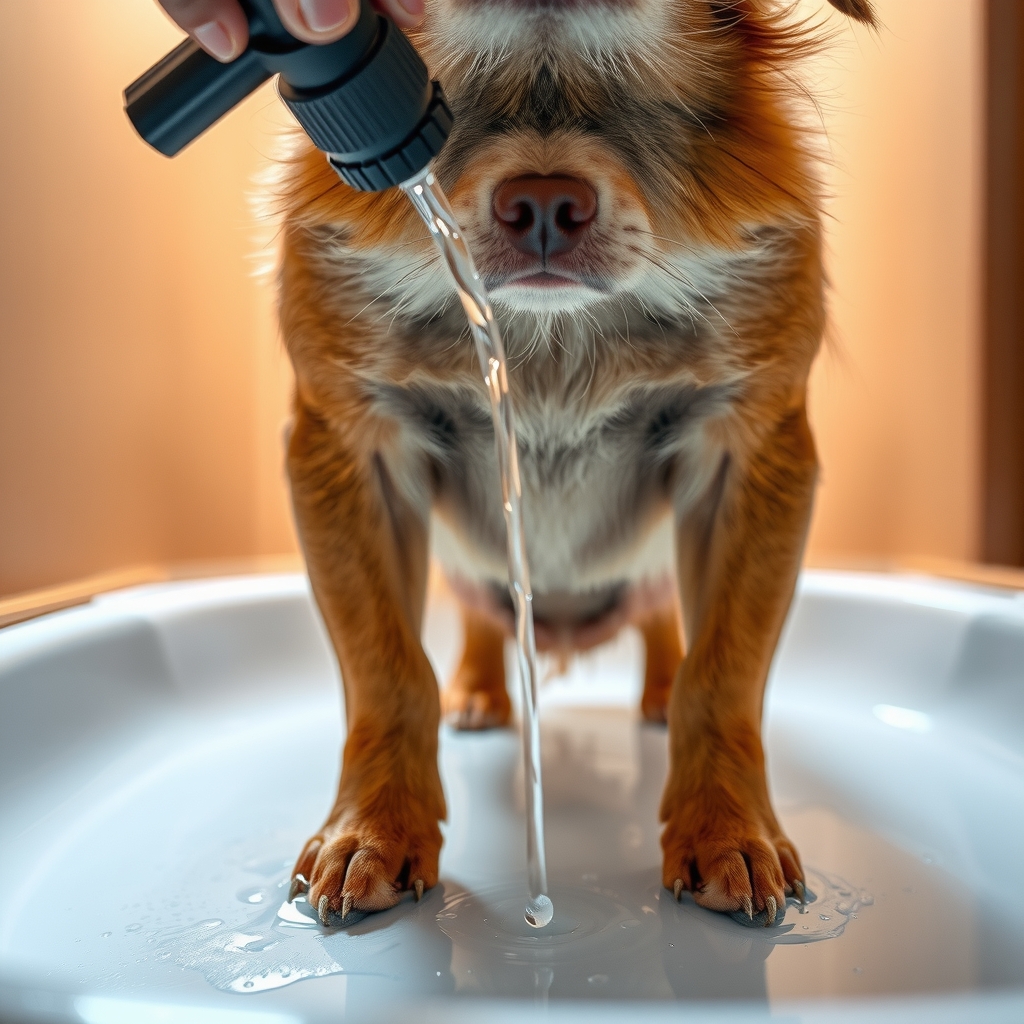
The Danger of Friction Matting: Sweaters, Coats, and Harnesses
When windchill warnings strike Montreal, dressing your dog in a waterproof coat, fleece sweater, or insulated snowsuit is often necessary for canine comfort and thermal protection. Short-haired breeds, senior pets, and small dogs depend on these garments to withstand Quebec freezes. However, winter clothing introduces a silent hazard that catches many dedicated pet owners off guard: mechanical friction matting.
Every step your dog takes causes fabric to rub back and forth against the fur. This continuous friction abrades the outer cuticle of each hair shaft, raising tiny microscopic scales along the hair surface. When these scales catch on neighboring hairs, they interlock like Velcro. If dead shedding hairs are trapped beneath the fabric, the rubbing action rapidly compresses them into dense, felted knots known as friction mats.
Certain anatomical areas are particularly prone to rapid winter matting:
- The Axillary Cavity (Armpits): The constant back-and-forth movement of the front legs against sweater armholes and harness straps creates the tightest mats on a dog’s body.
- The Sternal and Chest Plate: Harness pads and coat straps compress wet hair directly against the chest bone, creating broad, flat pelts.
- The Cervical Line (Neck and Throat): Heavy winter collars and high-neck fleece sweaters generate intense rubbing around the throat and behind the ears.
- The Flank and Groin: Elastic leg straps designed to hold winter coats securely against the hindquarters frequently rub fine groin fur into painful tangles.
The danger multiplies exponentially when winter garments get damp from snow or freezing rain. When moisture seeps beneath an insulated jacket, the trapped body heat creates a humid microclimate. As the wet coat naturally dries under the compression of the garment, individual hairs contract and tighten around each other. What was a loose tangle at 2:00 PM during a walk in Mount Royal Park can easily become an immovable, skin-tight pelt by the following afternoon.
To eliminate friction matting, adopt a strict three-step protocol every time you return from a walk:
- Remove Gear Immediately: Never leave coats, sweaters, or harnesses on your dog once you step inside your warm home. Leaving gear on traps heat, moisture, and compression.
- Towel Dry the Friction Zones: Gently blot moisture from the armpits, chest, neck, and inner thighs using an absorbent microfiber towel. Never rub vigorously in circular motions, as rough towel rubbing spins hair into knots.
- Line Comb the Danger Areas: Spend two focused minutes running a metal greyhound comb through the high-friction zones while the fur is still slightly damp. Separating the hair shafts before they fully dry prevents the cuticle scales from locking together.
Essential Dog Coat Care in Montreal Winter: Tailored Brushing by Coat Type
One of the most frequent misconceptions among dog owners is that a single generic brush is sufficient for all breeds throughout the winter season. In reality, canine coat structures vary widely across breeds, and each coat architecture responds differently to Montreal’s freezing weather. Using the wrong grooming tool can scratch dry winter skin, miss deep undercoat impactions, or simply glide over the top layer without addressing the root tangles where mats actually originate.
To keep your dog comfortable and mat-free, you must tailor your technique and tooling to their specific coat classification:
Double-Coated Breeds (Huskies, German Shepherds, Retrievers, Bernese Mountain Dogs)
Double coats consist of two distinct layers: a stiff, weather-resistant outer guard coat and a dense, woolly undercoat. During winter, the undercoat thickens considerably. A standard pin brush will only skim the outer guard hairs, leaving the undercoat to pack down against the skin like thick felt. For double coats, use an undercoat rake with rotating smooth teeth to pull out dead, shed undercoat without cutting the guard hairs. Follow this with a slicker brush and a wide-toothed metal comb, working in small sections from the rear quarters forward.
Curly, Wavy, and Doodle Coats (Poodles, Goldendoodles, Labradoodles, Bichons)
Poodles and doodle varieties have hair rather than fur, meaning their coats grow continuously and shed minimally. However, the dead hairs that do shed do not fall to the ground; they become trapped inside the surrounding curls. When combined with winter static, snow moisture, and friction from winter coats, doodle coats can pelt down to the skin in less than a week. The only effective technique is line combing: using one hand to hold the coat back so you can see the pink skin, and using a long-pinned slicker brush in your other hand to gently brush small sections out from the base, followed by a metal greyhound comb to verify that no knots remain near the skin.
Smooth and Short Coats (French Bulldogs, Boxers, Boston Terriers, Pitbull Mixes)
While short-coated dogs do not suffer from tangles or mats, their skin is directly exposed to winter draft and dry indoor air. Their primary winter challenge is severe dry flaking, itching, and loss of sebum. For these breeds, a rubber curry brush or a natural boar bristle brush works wonders. Massaging the coat with a rubber curry in circular motions stimulates cutaneous capillary blood circulation, exfoliates dead skin cells, and distributes natural sebaceous oils evenly along the short hair shafts.
Silky and Long Single Coats (Yorkshire Terriers, Maltese, Shih Tzus, Afghan Hounds)
Silky coats lack a dense undercoat, meaning their fine, hair-like strands easily catch static electricity and break under dry indoor conditions. Never brush a dry silky coat during winter, as dry brushing snaps fragile hair shafts and generates intense static charge. Always mist the coat lightly with a pet-safe hydrating leave-in conditioner spray before gliding through with a pin brush without protective balls (which can rip delicate ends), finishing with a fine-toothed metal comb.
| Coat Type | Primary Winter Challenge | Recommended Tools | Optimal Winter Frequency |
|---|---|---|---|
| Double Coat (Huskies, Retrievers) | Compacted undercoat, trapped dampness, pelted base | Undercoat rake, slicker brush, metal comb | 3 to 4 times weekly |
| Curly & Doodle (Poodles, Doodles) | Rapid friction matting from sweaters, moisture shrinkage | Long-pin slicker, metal greyhound comb | Daily to every other day |
| Smooth & Short (Frenchies, Boxers) | Severe cutaneous flaking, loss of sebum barrier | Rubber curry mitt, natural boar bristle brush | 2 times weekly |
| Silky & Long (Yorkies, Maltese) | Static electricity, brittle snapped hair ends | Pin brush, fine metal comb, leave-in conditioning mist | Daily line combing |
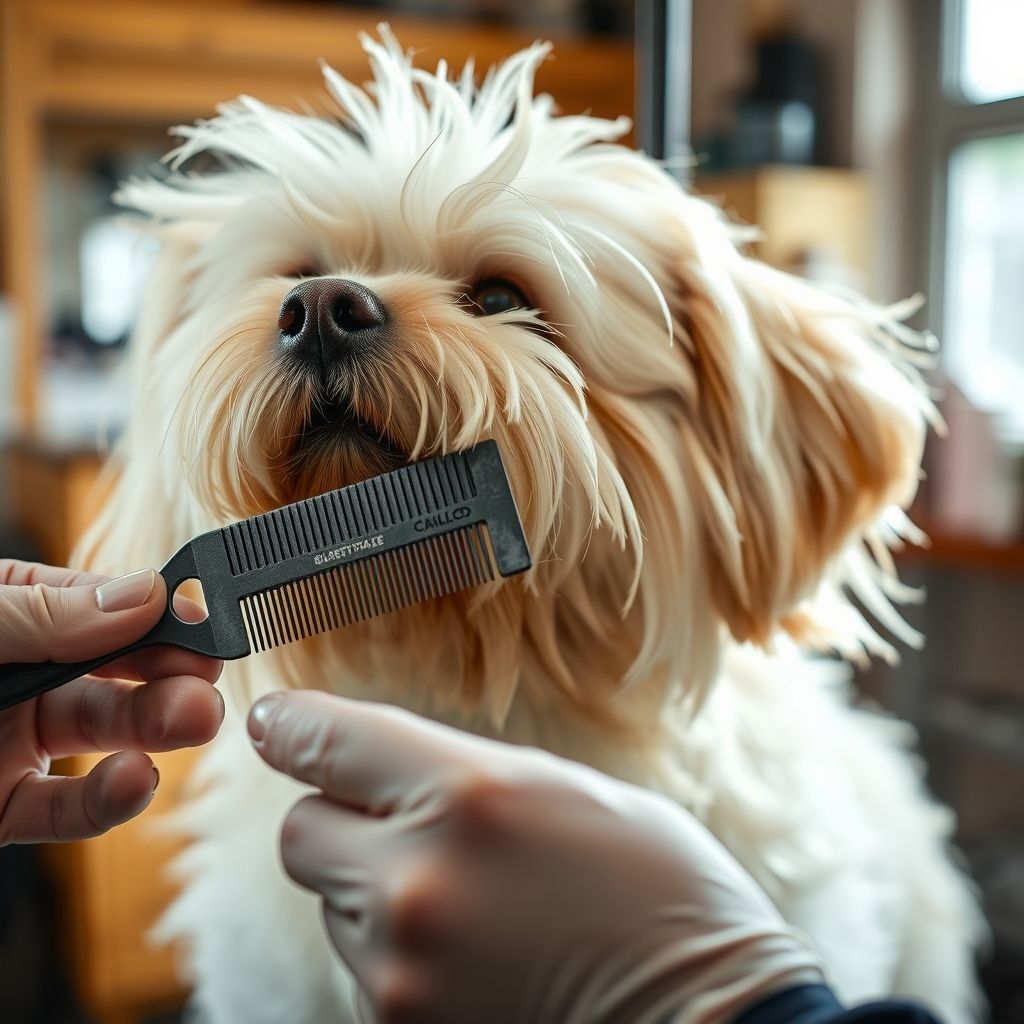
Bathing and Drying Protocol: Water Temperature, Shampoos, and Blow-Drying
Bathing a dog during a Quebec winter requires a delicate balance. While frequent summer baths might be routine, washing your dog too often during winter strips away the natural lipid barrier that shields their skin from dry indoor heat and freezing drafts. However, completely avoiding baths for four months is equally problematic, as accumulated street grime, city soot, and chemical salt residues will irritate the dermal layers and trigger inflammatory hot spots.
For most indoor companion dogs in Montreal, a full bath every 4 to 6 weeks is the ideal winter schedule, supplemented by spot rinsing after snowy walks. When preparing a bath, water temperature is paramount. Human owners often make the mistake of using pleasantly hot water, assuming a steamy bath will warm up a chilled dog. In canine physiology, hot water strips skin lipids rapidly and causes cutaneous vasodilation—the sudden widening of blood vessels in the skin. This triggers intense rebound itching, skin redness, and rapid core heat loss once the dog exits the tub.
Always maintain lukewarm water between 35°C and 37°C (95°F to 98°F). The water should feel barely warm to the inside of your wrist. Thoroughly saturate the coat down to the roots before applying shampoo, ensuring you never pull or scrub tangles in circular motions that cause bath-induced matting.
The choice of bathing products makes a tremendous difference in winter coat resilience:
- Canine-Specific pH Balance: Canine skin has a near-neutral pH (typically 6.5 to 7.5), whereas human skin is naturally acidic (around 5.5). Using human shampoos, dish soaps, or baby formulas disrupts the canine acid mantle, leaving the skin defenseless against bacteria and yeast. According to clinical veterinary dermatologists cited by the American Kennel Club (AKC), using inappropriate soaps is one of the leading avoidable triggers of winter canine dermatitis.
- Hydrating Botanical Ingredients: Look for shampoos formulated with colloidal oatmeal, organic aloe vera leaf juice, hydrolyzed silk proteins, and plant ceramides. These active ingredients soothe micro-abrasions and reinforce the intercellular lipid matrix.
- Mandatory Winter Conditioning: In cold weather, shampooing must always be followed by a deep canine conditioner or moisture rinse. Conditioners close the microscopic scales of the hair cuticle, restoring a smooth outer surface that resists static buildup and repels road salt crystals.
The final and most critical phase of winter bathing is the drying procedure. Allowing a thick-coated or long-haired dog to air-dry inside a winter home is hazardous. Dense undercoats retain moisture deep near the follicles for eight to twelve hours in cold indoor environments. This damp darkness creates an ideal breeding ground for Malassezia yeast dermatitis and acute moist dermatitis (hot spots). Furthermore, as outlined in the AKC guidelines on drying dogs safely, damp dogs exposed to room drafts experience severe thermal stress.
Towel dry your dog by gently pressing microfiber towels into the coat to absorb bulk water without twisting the hair. Follow immediately with a blow dryer set to the low or cool heat setting, keeping the nozzle moving continuously six to eight inches away from the skin. Professional grooming salons use specialized high-velocity cool-air blowers that mechanically blast trapped water droplets out of the dense undercoat while aerating the skin, ensuring your dog is 100% dry and protected before going back outdoors.
In-Home Environmental and Dietary Support
While external grooming tools and bath routines form the frontline of defense, coat health is fundamentally an internal and environmental matter. The atmosphere inside your Montreal residence directly dictates whether your dog’s skin can retain vital cellular hydration throughout December, January, and February.
Electric heating coils and forced-air ducts act as continuous dehumidifiers, often pulling household relative humidity down to between 15% and 25%. In this bone-dry microclimate, your dog’s skin loses water via transepidermal water loss at more than twice the normal summer rate. Running an ultrasonic cool-mist humidifier in the rooms where your dog sleeps and spends the most time is one of the most effective interventions you can make. Maintaining ambient indoor humidity between 40% and 50% eliminates electrostatic static charges in the fur, soothes itchy nasal passages, and prevents cutaneous flaking.
Winter hydration is equally critical. In freezing temperatures, many dogs naturally drink less water than they do during hot summer months. However, their respiratory systems lose significant amounts of water vapor just warming up and humidifying the cold air they inhale on walks. Ensure your dog always has access to clean, room-temperature water. If your dog is reluctant to drink enough, try adding warm low-sodium bone broth to their meals or transitioning a portion of their kibble to high-moisture canned wet food.
Supporting coat health through targeted canine nutrition reinforces the dermal lipid barrier from within:
- Omega-3 Fatty Acids (EPA and DHA): High-potency marine oils, such as wild Alaskan salmon oil or sardine oil, provide concentrated eicosapentaenoic acid (EPA) and docosahexaenoic acid (DHA). These essential fatty acids act as natural anti-inflammatories, nourishing the hair follicles, fortifying cell membranes, and creating a soft, glossy coat that resists winter brittleness.
- Dietary Zinc and Biotin: Zinc plays a fundamental enzymatic role in cellular keratinization and skin repair. Breeds predisposed to zinc deficiencies, such as Northern double-coated breeds, often suffer from hyperkeratosis and dull fur when cold weather arrives.
- Quality Protein Sources: Hair consists of approximately 90% keratin protein. Ensure your dog’s daily diet features easily digestible animal proteins rather than plant-based fillers, providing the necessary sulfur-containing amino acids (methionine and cystine) required for healthy coat regeneration.
When selecting supplements or skin balms, always rely on tested pet-grade formulations available through your veterinarian or a reputable pet care boutique. Avoid applying human hand lotions, Vaseline, or essential oil blends to your dog’s coat. Human skincare products contain fragrances, chemical preservatives, and humectants that sting broken skin and cause serious gastrointestinal distress if licked off.
Professional Salon Treatments: What to Book During Cold Weather
Maintaining a dog’s coat through a harsh Quebec winter is rarely a solo endeavor. While consistent at-home brushing and rinsing keep everyday salt and friction in check, partnering with an experienced groomer provides deep therapeutic care that standard home setups cannot replicate. Knowing what services to request ensures your dog stays warm, tidy, and completely comfortable throughout the season.
When booking professional dog grooming in Montreal during the winter months, your goal is structural maintenance rather than drastic styling. A common question among pet owners is how often your dog should see a groomer in cold weather. For breeds prone to matting and heavy undercoat growth, a 4-to-6-week appointment cycle is the benchmark for preventing compacted pelts.
Essential professional winter grooming services include:
- Sanitary and Contour Trimming: Rather than shaving your dog down, request a practical winter contour trim. The groomer neatly clips the fur around the sanitary areas, trims excessive leg feathering that drags through slush, and clears hair from the lower abdomen. This keeps the protective length across the back and chest while minimizing street grime absorption.
- Paw and Pad Detailing: Groomers carefully scoop excess hair from between the paw pads using fine trimmer blades. Clearing this hair prevents frozen snowballs from welding between the toes and allows protective paw balms to make direct contact with the pad leather.
- Deep Restorative Conditioning Masks: Salons utilize specialized canine fur masks enriched with argan oil, shea butter, and keratin complexes. Applied with warm towels, these intensive treatments penetrate deep into dry hair follicles to restore elasticity and natural sheen.
- High-Velocity De-shedding Blowouts: For double-coated breeds, salon high-velocity dryers safely dislodge dead, compacted undercoat that regular brushing cannot reach. Removing this trapped dead hair restores airflow to the skin and revitalizes the coat’s natural thermal insulation.
Master Groomer Note (Hamid, Toutou Village): “Winter can be an emotionally taxing time for dogs. Freezing sidewalks cause muscle stiffness, salted paws make them sensitive to touch, and bulky winter apparel creates general sensory irritation. When grooming dogs during cold months, we take extra time to warm their joints, handle their paws with utmost gentleness, and never rush through detangling. Taking a gentle approach to grooming anxious dogs is essential because patience and positive reinforcement transform what could be a stressful winter chore into a soothing, restorative spa experience.”
| Grooming Task | Home Maintenance Step | Professional Salon Treatment | Warning Signs to Watch For |
|---|---|---|---|
| Road Salt Decontamination | Lukewarm water rinse of paws and belly after every walk | Detoxifying hydrobath with pH-balanced soothing botanicals | Chalky residue, constant paw chewing, red skin |
| Friction Mat Prevention | Line combing armpits, neck, and groin after gear removal | Precision sanitary clearance and armpit contour trimming | Tight knots against skin, flinching when touched |
| Skin Hydration & Dander | Indoor cool-mist humidifiers and Omega-3 dietary oils | Hot towel lipid mask and deep leave-in conditioning seal | White flaking, brittle hair breakage, dull coat |
| Undercoat Compaction | Weekly undercoat raking and metal greyhound combing | High-velocity warm aeration and shed release therapy | Pelt-like texture, sour damp smell, trapped debris |
Frequently Asked Questions About Winter Dog Coat Care
Should I ever shave my dog’s coat for winter to prevent snow and salt buildup?
No, you should never shave your dog down for the winter season, particularly double-coated breeds such as Huskies, Golden Retrievers, German Shepherds, or Australian Shepherds. Shaving strips away the weather-resistant guard hairs that shield your dog from freezing winds, rain, and snow. Without this outer protection, wet snow seeps directly onto the skin, drastically elevating the risk of hypothermia. For curly or long-haired breeds prone to matting, the recommended approach is a practical winter maintenance trim: keeping 1.5 to 2 inches of length across the torso while neatly tidying the belly, rear feathering, and paw pads to minimize slush collection.
How can I safely remove frozen snowballs from my dog’s belly and leg fur without causing pain?
Never attempt to pull, yank, or cut frozen snowballs out of your dog’s coat with scissors. Ice balls freeze tightly around individual hair strands down to the sensitive skin surface; pulling tears the hair follicles out by the root, and using scissors on a moving dog can easily lead to severe dermal lacerations. Instead, guide your dog into the bathtub or shower and run lukewarm water over the frozen clusters until they naturally melt away. In a pinch, holding a warm, damp microfiber towel against the ice balls for 30 to 60 seconds will safely dissolve the frozen bond without tugging on the coat.
Can I use human moisturizing cream or coconut oil on my dog’s dry, flaky winter skin?
Human moisturizing lotions should never be applied to canine skin. Human products frequently contain chemical emulsifiers, artificial fragrances, parabens, and humectants formulated for acidic human skin (pH 5.5). In dogs, these ingredients disrupt the natural skin barrier, cause contact dermatitis, and induce vomiting or toxic side effects when licked. While pure coconut oil is non-toxic, applying it heavily to a dog’s coat attracts household dust, soils furniture, and triggers acute diarrhea or pancreatitis if ingested in large quantities. Always choose veterinary-approved, pH-balanced canine conditioners or omega-rich topical balms specifically designed for canine dermatology.
How do I stop static electricity shocks from crackling through my dog’s fur indoors?
Static electricity is triggered by extremely low humidity inside heated homes combined with dry brushing. To eliminate static shocks, first run a cool-mist humidifier in your home to keep ambient humidity between 40% and 50%. Second, never brush a completely dry coat in the winter. Always lightly mist your dog’s fur with a pet-safe leave-in conditioning spray or a mixture of pure water and a drop of canine conditioner before brushing. Finally, swap plastic bristle brushes for high-quality metal-toothed greyhound combs or natural boar bristle brushes, which do not conduct static charge.
What is the safest way to clean road salt off my dog’s underbelly after an NDG or downtown walk?
The safest and most effective method is a quick lukewarm water rinse in your entryway or bathtub. Keep a shallow basin of lukewarm water and a soft washcloth near your front door, or use a handheld shower attachment to rinse the undercarriage and legs thoroughly. Blot the fur dry immediately with a clean microfiber towel to prevent dampness from chilling your dog. Avoid relying solely on dry towels or brushes to wipe off road salt, as rubbing dry salt crystals against the skin acts like coarse sandpaper, causing painful micro-abrasions and driving chemical de-icers deeper into the dermal pores.
Conclusion: Keeping Your Dog Warm, Comfortable, and Radiant All Season Long
Mastering comprehensive dog coat care Montreal winter pet owners can rely on does not require hours of complex labor every day. By establishing a steady rhythm of daily line combing in friction areas, rinsing off abrasive road salts immediately after neighborhood strolls, and supporting your dog’s skin with proper indoor humidity and omega fatty acids, you ensure that winter remains a joyful season of snowy outdoor fun rather than a battle against painful mats and itchy dander.
When winter weather takes its toll or your companion’s coat requires specialized restoration, our caring team at Toutou Village is here to support you. Located in the heart of Montreal on Somerled Avenue, our state-of-the-art salon provides soothing, gentle grooming experiences tailored to your dog’s unique coat architecture, temperament, and winter health needs.
Whether your dog needs a hydrating winter conditioning hydrobath, a tidy contour trim, or a professional deshedding treatment to prepare for cold snaps, we invite you to book an appointment through our convenient online reservation system. You can also reach our friendly team directly by calling (514) 357-4509, sending a quick text to (263) 384-4509, or emailing us at [email protected]. Stop by our salon at 6274 Av Somerled, Montréal, QC H3X 2B6 to explore our curated pet care boutique, or contact our Montreal team today to keep your beloved companion healthy, warm, and thriving all winter long.
About the Author: Hamid
Hamid is the Founder and Master Groomer at Toutou Village in Montreal. Grooming pets professionally in Canada since 2019, Hamid holds multiple advanced certifications in companion animal maintenance, canine skin therapy, and behavioral handling. With years of hands-on daily experience caring for dogs across Montreal’s demanding winter seasons, Hamid is passionate about gentle, fear-free grooming practices that prioritize animal well-being, skin health, and client education.