
Spicy cats: a gentle approach to anxiety
In grooming salons, some four-legged clients earn an affectionate nickname: “the spicy ones.” Cats who tremble the moment they arrive, hide in their carrier, or growl at the first sound of clippers. If you live with one of these fiery sweethearts, you have probably asked: “Can my cat even be groomed without tears and drama?”
After working with hundreds of cats, the short answer is yes. That yes has conditions: patience, reading feline body language, and what we call a gentle approach. This is not textbook theory; it is what happens at the grooming table.
Why some cats fear grooming
A cat that struggles during grooming is not stubborn or mean. It is saying: “I do not feel safe.” Common reasons include:
- A bad past session. One rushed, high-pressure appointment can stick in a cat’s emotional memory.
- Unfamiliar sounds and tools. Clipper buzz, dryer air, and a vibrating table scare a cat that has never been introduced to them.
- Touch sensitivity. Paws, ears, tail, and belly are sensitive. Sometimes there is a medical root; arthritis in older cats can make lifting a leg genuinely painful.
- Separation from the owner. For many cats the hardest part is not water or scissors — it is hours away from their person.
- Natural temperament. Some breeds, and some individuals regardless of breed, are more cautious. That is personality, not a flaw. Work with it, not against it.
Unlike dogs, cats show less “social cooperation” and more need to control the environment. Force turns into attack or freeze much faster.
Learn the signs of anxiety
A cat almost always warns before it explodes; people often miss it.
- Repeated lip or nose licking with no food
- Yawning again and again (often stress, not sleep)
- Flattened ears, dilated pupils, tucked tail or a rapidly twitching tail tip
- Trembling or sudden shedding
- Panting or rapid breathing without heat or exercise
- Hunched posture, crouching, or going completely still (a frozen cat is not necessarily calm)
- Growling, hissing, a swipe, or trying to escape
If lip licking starts mid-session, that means “I need a break.” Drop the clock and listen.
The gentle approach, step by step
1. Meet the space before any work
The first visit is sometimes not a groom at all. The cat comes in, sniffs the room, gets a few treats, and goes home. From the outside it looks useless. That “nothing happened” visit is the foundation of trust. In severe cases, two or three short intro visits are worth it.
2. An environment built for calm
- Book anxious cats in quiet hours.
- Use quiet clippers and a gentle dryer, or towel-dry.
- Put a non-slip surface on the table. Many “difficult” cats fear sliding on metal more than grooming itself.
- Keep the familiar carrier, a home-scented towel, and if possible a separate low-light room.
- Cat-specific calming scents (pheromone products) help some individuals.
3. Go slowly, with rewards
The core is gradual desensitization plus positive reinforcement: every tiny step earns a reward.
Clippers off, near the body; treat. Clippers on, but far away; treat. A few seconds of contact; treat and a calm voice. The cat’s brain links the sound to something good, not to fear. It is slower. It lasts. By session three or four, a cat may walk in with the tail a little higher.
4. Planned breaks
A full session can exhaust an anxious cat. Break the work: a few minutes of grooming, a few minutes of rest in the carrier or on a towel, then continue. Sometimes split a full groom into two appointments. The goal is not “finish fast.” The goal is an experience the cat will tolerate again.
5. Never force, never punish
This is the red line. A cat held down may get groomed that day, but fear multiplies and the next visit is harder. If the cat is not ready, tell the owner honestly and build a backup plan. Your trust and the cat’s emotional health matter more than one appointment.
What to do at home
Half the work happens at home.
- Daily touch. Every day, gently handle paws, ears, and tail for a few minutes and give a treat right away.
- Make the brush a good habit. Soft brush, very short session; even thirty seconds is enough. End on a good note. You do not have to undo every mat in one day.
- Introduce sounds early. Play a recording of a dryer or clippers at low volume during meals or play, then raise it slowly.
- Stay calm yourself. Cats read your arousal. A short goodbye, a normal tone, leave without lingering.
- Burn energy before the appointment. Wand toys or a laser (always end with a real catch they can touch) raise tolerance. A tired cat is calmer. Never exhaust a cat to the point of shutdown.
Tools and products that actually help
No product is magic. Combined with practice, these make a difference:
- A soft brush with a comfortable handle; a harsh brush builds a bad experience
- A non-slip mat for bathing or home grooming
- Tiny low-calorie treats so you can repeat many times in one session
- Lickable treats or paste; licking is naturally calming
- Cat-specific pheromones or calming scent (diffuser or spray on a towel, never on the face)
If you are unsure what fits your cat, ask at the next visit; that advice should be free.
When a veterinarian should step in
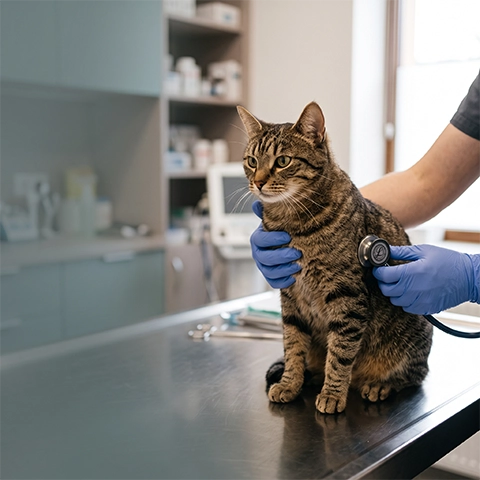
Some anxiety is beyond a groomer and home practice. See a vet if the cat:
- panics in many situations, not only grooming,
- shows pain when a specific spot is touched,
- or makes no progress after months of gentle work.
Sometimes the root is hidden pain. Sometimes a short-term medication for grooming visits is appropriate. Coordinating with a vet is part of professional care.
Never give sedatives or even “herbal” calming products without a prescription.
Last word: the spicy ones are the favorites
It may sound odd, but these spicy cats are often the most loved clients. Few things beat watching a cat that trembled on day one walk toward a treat months later with the tail a little higher. That is not overnight. It is patience, repetition, and teamwork among you, the groomer, and sometimes the vet.
If your cat is one of these lovable characters, start with a short meet-and-greet: no clippers, no pressure — just a few treats and a lot of patience.
Follow TouTouVillage In Instagram